Bortezomib for Multiple Myeloma Treatment in Newcastle, North East England, UK (2026)
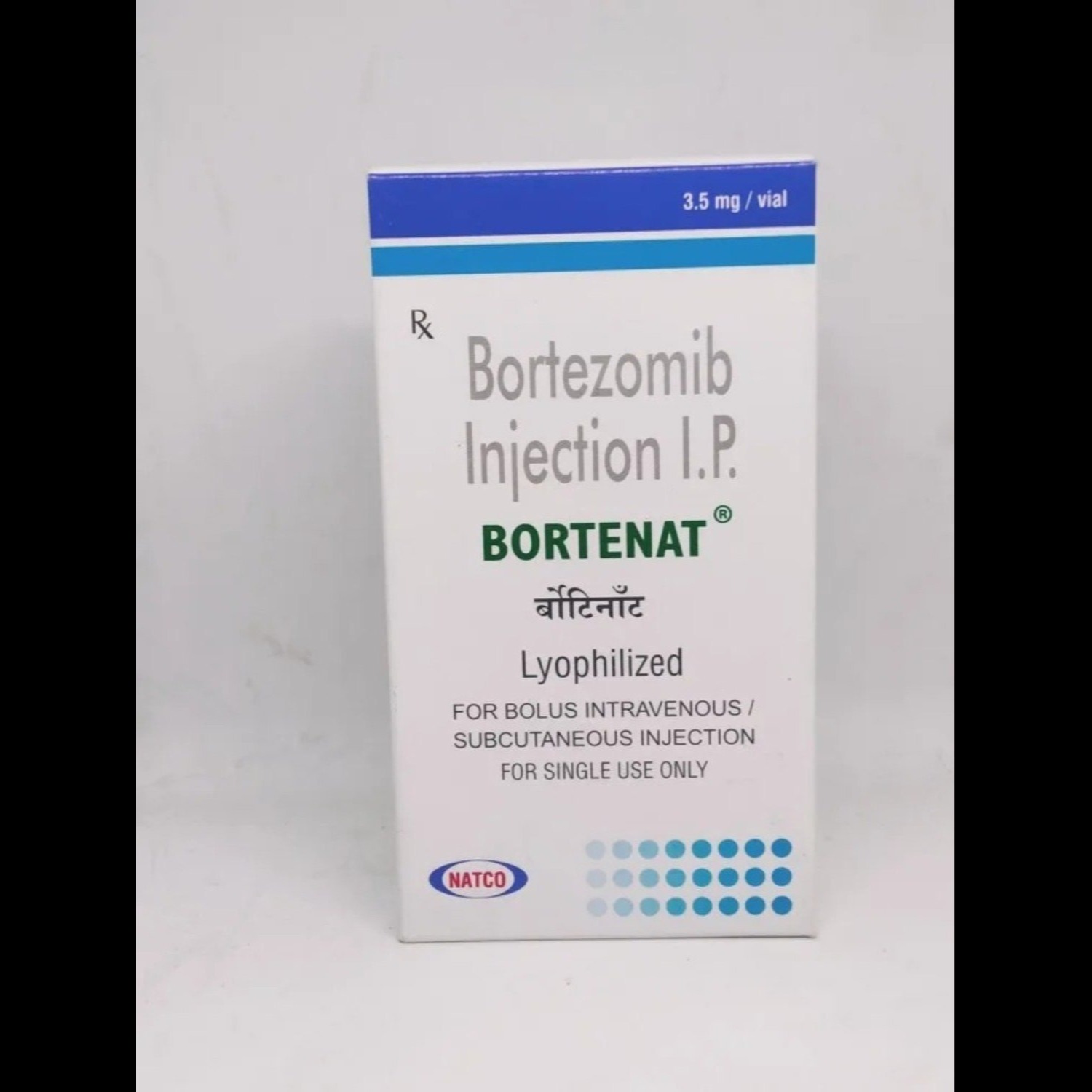
Bortenat 3.5 mg Injection
Brand Name: Bortenat 3.5 mg Injection
Generic Name: Bortezomib
Strength: 3.5 mg/Vial
Dosage Form: Lyophilized Powder for Injection
Administration: Intravenous (IV) or Subcutaneous (SC) Injection
Therapeutic Class: Proteasome Inhibitor
Indication: Multiple Myeloma, Mantle Cell Lymphoma (under specialist supervision)
Product Description
Bortenat 3.5 mg Injection is a generic alternative to Velcade® containing Bortezomib, a first-generation proteasome inhibitor widely used in the treatment of multiple myeloma and mantle cell lymphoma. It works by blocking the 26S proteasome inside cancer cells, leading to the accumulation of damaged proteins and triggering programmed cell death (apoptosis). Bortezomib remains a cornerstone therapy in modern multiple myeloma treatment and is frequently combined with dexamethasone, lenalidomide, cyclophosphamide, melphalan, or daratumumab depending on the patient's disease stage and treatment history.
For patients in Newcastle, North East England, Bortenat offers an affordable generic option for specialist oncology treatment where prescribed by a qualified hematologist.
Key Features
- Generic equivalent of Velcade® (Bortezomib)
- Contains 3.5 mg Bortezomib per vial
- Used in multiple myeloma treatment protocols
- Effective in relapsed and newly diagnosed patients
- Can be administered intravenously or subcutaneously
- Often combined with dexamethasone, lenalidomide, melphalan or daratumumab
- Manufactured under WHO-GMP compliant facilities
- Export quality pharmaceutical product
- Intended for hospital and oncology clinic use only
- Prescription medicine requiring specialist supervision
Medical Uses
Bortenat 3.5 mg Injection is commonly prescribed for:
- Multiple Myeloma
- Relapsed Multiple Myeloma
- Newly Diagnosed Multiple Myeloma
- Mantle Cell Lymphoma
- Combination chemotherapy protocols
Mechanism of Action
Bortezomib inhibits the 26S proteasome, preventing cancer cells from removing damaged proteins. This disruption causes protein accumulation, cell cycle arrest, and apoptosis, helping slow the growth of malignant plasma cells.
Advantages
- Proven survival benefit in multiple myeloma
- Standard component of international treatment guidelines
- Can be used before or after stem cell transplantation
- Suitable for combination regimens
- Generic version offers cost savings
- Well-established safety and efficacy profile under specialist monitoring
Storage
- Store below 25°C.
- Protect from moisture and light.
- Keep in the original packaging.
- Reconstitute only by trained healthcare professionals.
Safety Information
Common adverse effects may include:
- Peripheral neuropathy
- Fatigue
- Nausea
- Diarrhea or constipation
- Low platelet count
- Low white blood cell count
- Increased risk of infection
Patients should receive treatment only under the supervision of an experienced oncology or hematology specialist.
Industry Update (2026)
Multiple myeloma treatment continues to evolve with combination therapies and personalized treatment strategies. In 2026, NICE approved belantamab mafodotin with bortezomib and dexamethasone for certain adults with previously treated multiple myeloma after one prior line of therapy. Meanwhile, other bortezomib-containing regimens such as DVRD continue to undergo appraisal for broader NHS access.
Healthcare professionals in Newcastle also have access to regional educational meetings focusing on the latest developments in myeloma management and evolving clinical pathways.
Newcastle's Freeman Hospital — home to the Northern Centre for Cancer Care (NCCC) — manages myeloma for North East England's 2.6 million population alongside Newcastle's Royal Victoria Infirmary haematology. The North East has higher myeloma mortality rates than southern England regions — reflecting socioeconomic deprivation's impact on cancer stage at presentation and treatment engagement. Bortenat 3.5mg provides Newcastle myeloma patients with affordable Bortezomib access at dramatically reduced cost versus NHS private prescription or brand Velcade pricing.
Visit unnatipharmax.com | 📱 +91 82650 41513 | 📧 Unnatipharmax@gmail.com

FAQ 1: How does Newcastle's Freeman Hospital Northern Centre for Cancer Care manage myeloma for the North East?
The Northern Centre for Cancer Care (NCCC) at Freeman Hospital — part of Newcastle upon Tyne Hospitals NHS Foundation Trust — is the North East's principal cancer centre, providing specialist haematological oncology including myeloma for the region spanning Northumberland, County Durham, and Tyne and Wear. NCCC's myeloma service structure: a multidisciplinary team meeting weekly reviews all new myeloma diagnoses and complex cases from the catchment area; consultant haematologists including myeloma specialists manage approximately 800 active myeloma patients in various treatment phases; clinical nurse specialists provide the patient-facing coordination — managing Bortenat dose adjustments, toxicity monitoring, and patient support between medical consultations; and NCCC participates in UK-wide myeloma clinical trials through the NCRI (National Cancer Research Institute) Haematological Oncology Studies Group. Bortenat 3.5mg's role in NCCC's myeloma protocols: administered subcutaneously (SC) as standard — the NCCC adopted SC Bortenat universally following the MMYVIII trial demonstrating equivalent efficacy with significantly lower peripheral neuropathy rates versus intravenous; twice-weekly schedule for induction (days 1, 4, 8, 11 of each 21-day cycle) transitioning to once-weekly for maintenance-like extended therapy. For Newcastle myeloma patients who are self-funding brief treatment gaps — changing between NHS prescribing pathways or returning from periods in other UK regions — Bortenat 3.5mg from Unnati Pharmax with WHO-GMP certification provides the quality-assured supply that NCCC's pharmacists require for patients continuing treatment outside NHS dispensing.
FAQ 2: How does North East England's significant socioeconomic deprivation affect myeloma outcomes and Bortenat access?
The North East of England — encompassing County Durham, Sunderland, Gateshead, and Newcastle — consistently ranks among England's most deprived regions on the Index of Multiple Deprivation. This deprivation context profoundly affects myeloma — from diagnosis through treatment. Late-stage presentation: North East myeloma patients present with more advanced ISS (International Staging System) stage III disease at diagnosis compared to less deprived southern England regions; delayed GP presentation — influenced by fatalism about health symptoms, difficulty taking time off manual or shift work for appointments, and lower health literacy — means bone lesions, renal impairment, and severe anaemia are more advanced at diagnosis. Treatment adherence: Bortenat requires twice-weekly clinic attendance for SC injection, which is straightforward in Newcastle's well-connected city but challenging for patients in County Durham's rural communities or those without transport; NCCC's patient transport service and home Bortenat administration nursing programme address this barrier. Employment impact: Bortenat's twice-weekly infusion schedule disrupts employment for Newcastle's working-age myeloma patients — concentrated in the region's healthcare, retail, and manufacturing sectors; NCCC's social workers navigate sick pay and Universal Credit during myeloma treatment. Bortenat 3.5mg from Unnati Pharmax is most relevant for Newcastle's self-funding international workers (present in Newcastle's growing tech and digital sector) rather than the region's core deprived population, whose access barriers are structural rather than financial and require the NHS pathway and NCCC's social support infrastructure.
FAQ 3: What is the evidence for Bortenat in treating AL amyloidosis — a myeloma-related plasma cell disorder?
AL (light chain) amyloidosis — caused by misfolded immunoglobulin light chains produced by a clonal plasma cell population (the same cells that cause myeloma) — deposits amyloid fibrils in organs including the heart, kidneys, liver, and peripheral nervous system. Newcastle's RVI and Freeman Hospital manage AL amyloidosis patients referred from across the North East, often in coordination with the UK's National Amyloidosis Centre in London. Bortenat 3.5mg in AL amyloidosis: the CyBorD regimen (Cyclophosphamide + Bortenat + Dexamethasone) is the standard induction therapy for transplant-eligible and transplant-ineligible AL amyloidosis — achieving haematological response in 60-80% of patients, which is the prerequisite for organ recovery. The haematological response concept in amyloidosis: reducing the amyloid-producing clone (measured by serum free light chain reduction) allows the deposited amyloid to gradually clear from organs over 12-24 months — cardiac function improves, renal function stabilises or recovers, and peripheral neuropathy may partially resolve. Newcastle's CyBorD dosing for AL amyloidosis: Bortenat 3.5mg administered subcutaneously once weekly (rather than twice weekly as in myeloma) — the less intense schedule reflects amyloidosis patients' generally more fragile baseline organ function; cardiac amyloidosis patients are particularly sensitive to Bortenat's cardiovascular effects and require echocardiographic monitoring during treatment. The addition of Daratumumab to CyBorD (Dara-CyBorD) — shown to dramatically improve response rates in the ANDROMEDA trial — is increasingly used at NCCC for newly diagnosed AL amyloidosis, with Bortenat remaining the essential proteasome inhibitor component of this regimen.
FAQ 4: How does Bortenat 3.5mg reconstitution work — practical guidance for Newcastle patients and their carers?
Bortenat 3.5mg is supplied as a lyophilised (freeze-dried) powder that requires reconstitution before administration — a practical step that Newcastle myeloma patients and carers should understand, as it influences how the medication is handled and administered. Reconstitution process: Bortenat 3.5mg powder is reconstituted with normal saline (0.9% NaCl); for SC injection — 1.4mL saline added to the vial produces a 2.5mg/mL concentration; for IV (rarely used in UK practice) — 3.5mL saline gives 1mg/mL. The reconstituted solution must be used within 8 hours when stored at room temperature, or within 24 hours when refrigerated at 2-8°C. In Newcastle's clinical context: NCCC's chemotherapy day unit pharmacists reconstitute Bortenat immediately before each administration — patients never handle the reconstituted solution; for the rare Newcastle patients receiving Bortenat at home through the NCCC's home chemotherapy service, specially trained oncology nurses prepare and administer the injection during their home visit, maintaining the professional preparation standard. Important storage guidance for Bortenat 3.5mg from Unnati Pharmax before reconstitution: unreconstituted vials must be stored at controlled room temperature (15-30°C, protected from light); Newcastle's winter temperatures are generally above freezing indoors, but vials should never be exposed to freezing outdoor temperatures or direct sunlight through Newcastle's often overcast windows; Newcastle patients receiving Bortenat through Unnati Pharmax must have a qualified healthcare professional (oncology nurse, pharmacist) prepare and administer each injection — self-injection of a chemotherapy agent without professional training and oversight is not appropriate.
FAQ 5: How does Newcastle's geography affect myeloma clinical trial participation that uses Bortenat as backbone therapy?
Newcastle's NCCC actively participates in UK and international myeloma clinical trials — providing North East myeloma patients access to cutting-edge therapy that would otherwise require travel to London's specialist centres. NCCC myeloma trials in mid-2026 that incorporate Bortenat: the MyeloMATCH initiative — a biomarker-driven treatment assignment protocol placing newly diagnosed myeloma patients into arms based on cytogenetic risk; Bortenat-based induction (VRD or VCD) is the backbone for standard-risk arms; the CARDAMON trial — examining carfilzomib (next-generation proteasome inhibitor) versus Bortenat in high-risk myeloma; and OPTIMUM/MUKnine — a trial for ultra-high-risk myeloma patients using intensive Bortenat-containing combinations. Geographic barrier for North East trial participation: some UK myeloma trials are open only at supraregional centres (UCLH London, Manchester Christie) — Newcastle patients willing to participate must travel to these centres; NCCC advocates for trial opening at Newcastle specifically because North East patients face the greatest distance barriers to London-based trials. For Newcastle myeloma patients on standard Bortenat therapy outside trial context, Bortenat 3.5mg from Unnati Pharmax supports the self-funding patient pathway when NHS dispensing has gaps — maintaining the therapeutic continuity that NCCC's specialist team has carefully planned for each Newcastle myeloma patient's individualised treatment programme.