
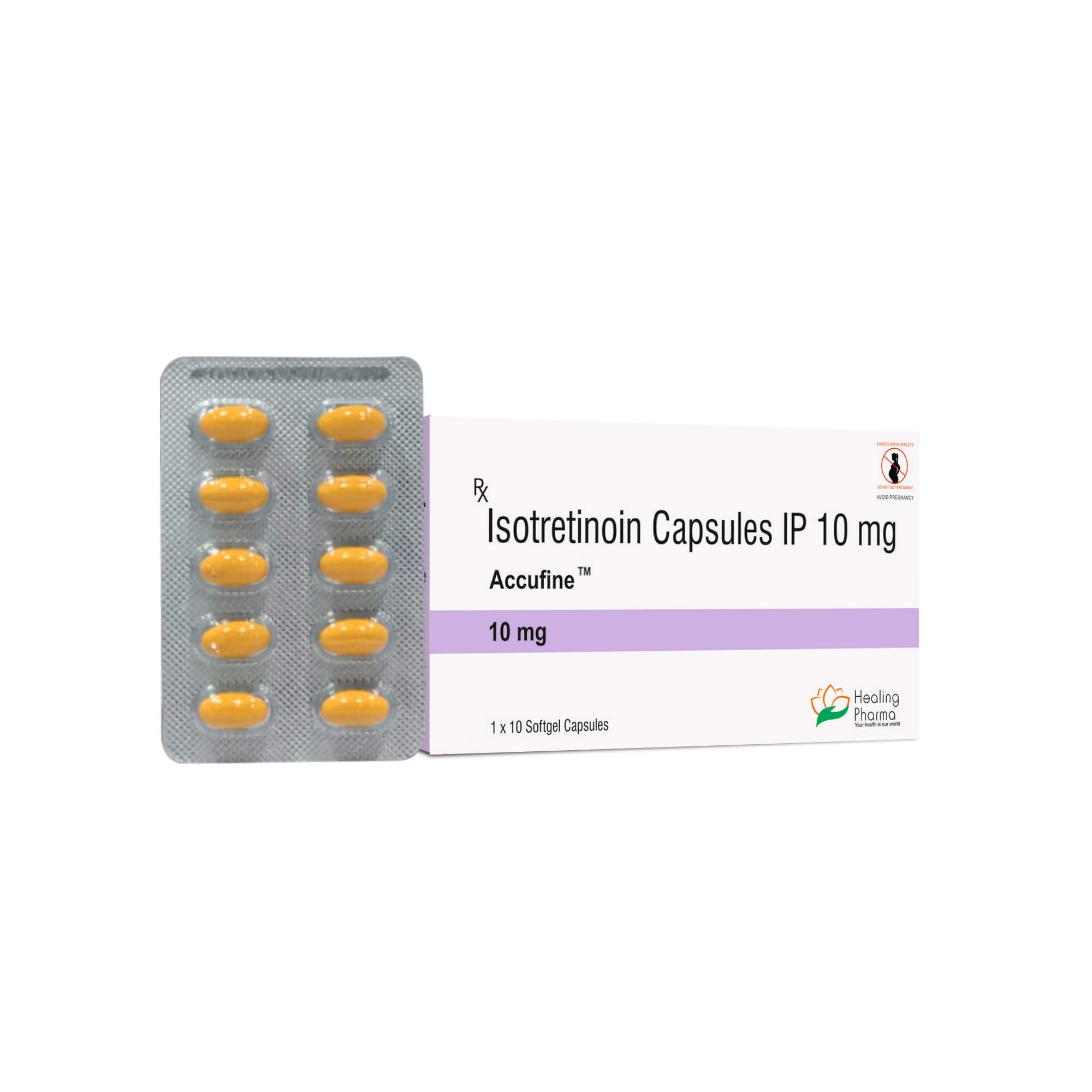
Accufine (Isotretinoin): Complete Guide to Severe Acne Treatment, Dosage, Side Effects & Results
Introduction
Persistent acne can affect much more than your appearance—it can lead to discomfort, permanent scarring, and reduced self-confidence. While many people respond well to topical creams or oral antibiotics, others continue to experience severe breakouts despite multiple treatments.
Accufine, which contains isotretinoin, is one of the most effective prescription medicines for treating severe, nodular, and treatment-resistant acne. It works by addressing the underlying causes of acne rather than simply treating existing pimples.
This guide explains how Accufine works, its benefits, recommended usage, possible side effects, precautions, and answers to common questions to help you better understand this medication.
What Is Accufine?
Accufine is an oral medication containing isotretinoin, a vitamin A derivative known as a retinoid. Dermatologists prescribe it primarily for severe acne that has not improved with conventional treatments.
Unlike topical products, isotretinoin works throughout the body to reduce oil production, decrease inflammation, prevent clogged pores, and reduce acne-causing bacteria.
Available Strengths
MedShopy offers Accufine in multiple strengths, including:
- Accufine 5 mg
- Accufine 10 mg
- Accufine 20 mg
- Accufine 30 mg
- Accufine 40 mg
The appropriate strength depends on your body weight, acne severity, and your healthcare provider’s recommendation.
How Does Accufine Work?
Accufine targets the four primary factors responsible for acne:
1. Reduces Excess Oil Production
The medication shrinks sebaceous glands, reducing sebum production. Less oil means pores are less likely to become clogged.
2. Prevents Blocked Pores
It normalizes skin cell turnover, helping prevent dead skin cells from accumulating inside hair follicles.
3. Reduces Acne-Causing Bacteria
Lower oil production creates an environment that is less favorable for the growth of acne-causing bacteria.
4. Reduces Inflammation
Accufine helps calm redness, swelling, and tenderness associated with inflamed acne lesions.
Uses of Accufine
Accufine is commonly prescribed for:
- Severe nodular acne
- Cystic acne
- Acne resistant to antibiotics
- Acne with scarring
- Chronic inflammatory acne
- Acne affecting the face, chest, and back
Benefits of Accufine
Many patients experience significant improvements after completing a full treatment course.
Benefits include:
- Long-lasting acne clearance
- Reduced frequency of future breakouts
- Smaller oil glands
- Less oily skin
- Reduced acne scars by preventing new lesions
- Improved skin texture
- Increased confidence and quality of life
Who Is a Good Candidate?
Accufine may be suitable for individuals with:
- Severe acne
- Painful cystic acne
- Persistent acne despite antibiotics
- Acne causing permanent scars
- Acne affecting emotional well-being
A healthcare professional should determine whether isotretinoin is appropriate for your specific condition.
Recommended Dosage
The dosage is individualized based on factors such as:
- Body weight
- Acne severity
- Response to treatment
- Tolerance to side effects
Treatment often lasts 4 to 6 months, although some patients may require a longer course.
Do not change your dose or stop treatment without consulting your healthcare provider.
How to Take Accufine
For best results:
- Take the capsule exactly as prescribed.
- Swallow it whole with water.
- Taking it with food may improve absorption.
- Take it at the same time each day.
- Complete the full course even if your skin begins to improve.
When Will You See Results?
Every patient responds differently, but a general timeline is:
Weeks 1–4
- Some people experience an initial acne flare.
- Skin may become dry.
Weeks 4–8
- New breakouts begin to decrease.
- Existing lesions start healing.
Months 3–4
- Significant reduction in acne.
- Less inflammation.
Months 5–6
- Many patients achieve near-complete clearance.
Common Side Effects
Most side effects are related to dryness and improve after treatment ends.
Common side effects include:
- Dry lips
- Dry skin
- Dry eyes
- Nosebleeds
- Mild muscle aches
- Increased sensitivity to sunlight
Using moisturizer, lip balm, sunscreen, and artificial tears can help manage these effects.
Serious Side Effects
Seek medical advice promptly if you experience:
- Severe headache
- Vision changes
- Persistent abdominal pain
- Yellowing of the skin or eyes
- Severe mood changes
- Allergic reactions
- Difficulty breathing
These reactions are uncommon but require prompt evaluation.
Important Precautions
Before starting Accufine:
- Discuss your medical history with your healthcare provider.
- Inform them of all medications and supplements you take.
- Regular follow-up appointments and blood tests may be recommended to monitor your health during treatment.
Pregnancy warning: Isotretinoin can cause serious birth defects. It must not be used during pregnancy, and effective contraception is essential for patients who can become pregnant.
Lifestyle Tips During Treatment
To help protect your skin while using Accufine:
- Use a gentle cleanser.
- Apply a non-comedogenic moisturizer daily.
- Wear broad-spectrum sunscreen (SPF 30 or higher).
- Avoid harsh exfoliants and abrasive scrubs.
- Stay hydrated.
- Avoid unnecessary sun exposure.
Frequently Asked Questions
Is Accufine the same as isotretinoin?
Yes. Accufine is a brand of isotretinoin capsules.
Can acne get worse before it gets better?
Yes. Some patients experience a temporary flare during the first few weeks.
Can I wear makeup?
Yes, as long as you use non-comedogenic products and remove makeup gently.
Can Accufine cure acne permanently?
Many patients experience long-lasting remission after completing a full course, although some may require additional treatment in the future.
How long is treatment?
Most courses last between 4 and 6 months, depending on the prescribed cumulative dose and individual response.
Can I drink alcohol while taking Accufine?
Alcohol may increase the risk of liver-related side effects. Discuss alcohol use with your healthcare provider.
Can I wax my skin?
Waxing and certain cosmetic procedures may increase the risk of skin injury during treatment. Consult your dermatologist before undergoing these treatments.
Can I donate blood during treatment?
No. Blood donation should be avoided during treatment and for a period after stopping the medication, as advised by your healthcare provider.
Will Accufine remove acne scars?
It helps prevent new scars by controlling acne, but existing scars may require additional treatments.
Do I need blood tests?
Many healthcare providers recommend periodic blood tests to monitor liver function and lipid levels during treatment.
Conclusion
Accufine (isotretinoin) is one of the most effective prescription treatments for severe acne, especially when other therapies have not worked. By reducing oil production, preventing clogged pores, decreasing inflammation, and limiting acne-causing bacteria, it can provide substantial and long-lasting improvement for many patients.
Because isotretinoin is a prescription medication with important precautions, it should always be used under the guidance of a qualified healthcare professional. Following the prescribed treatment plan and attending recommended follow-up appointments can help maximize benefits while minimizing risks.



