
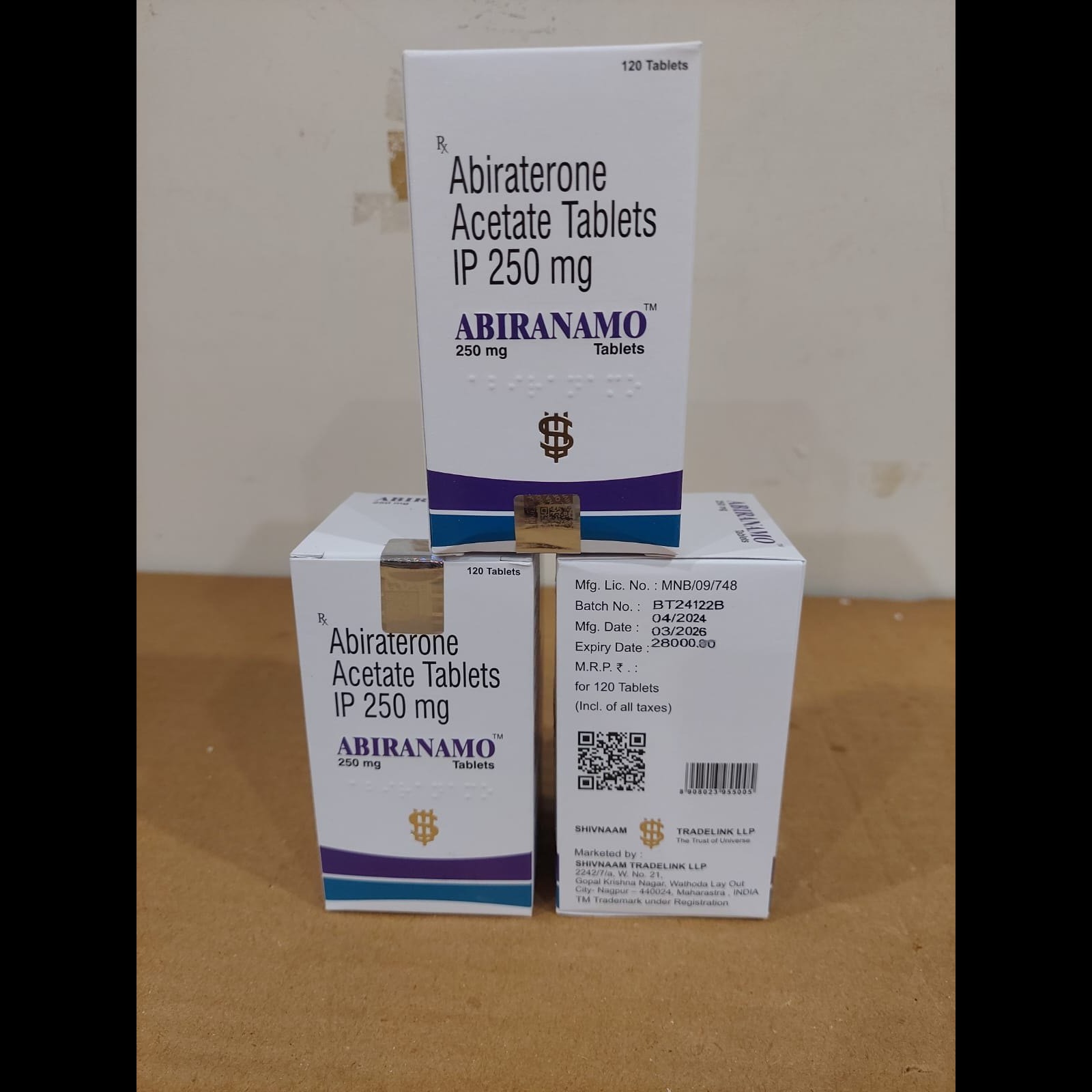
Perth's Sir Charles Gairdner Hospital oncology unit and Hollywood Private Hospital cancer services manage WA's prostate cancer patients requiring Abiraterone therapy. For Perth patients outside PBS eligibility criteria, facing high PBS co-payments, or seeking private treatment, Abiranamo 250mg delivers the same proven mCRPC and mHSPC therapy at dramatically reduced cost — enabling sustained treatment without financial hardship for WA patients and their families.
 FAQ 1: What is the ARAMIS and SPARTAN approach — how has prostate cancer management changed with non-metastatic CRPC treatments? FAQ 2: Does Abiranamo work better in high-volume or low-volume metastatic disease? FAQ 3: What palliative care integration is available for Perth prostate cancer patients on Abiranamo? FAQ 4: How does bone health management differ for prostate cancer patients on Abiranamo compared to standard ADT? FAQ 5: What genetic testing should prostate cancer patients consider before starting Abiranamo?
Visit unnatipharmax.com | 📱 +91 82650 41513 | 📧 Unnatipharmax@gmail.com
FAQ 1: What is the ARAMIS and SPARTAN approach — how has prostate cancer management changed with non-metastatic CRPC treatments?ARAMIS (Darolutamide), SPARTAN (Apalutamide), and PROSPER (Enzalutamide) trials defined a new disease state — non-metastatic castration-resistant prostate cancer (nmCRPC) — where PSA is rising despite castrate testosterone levels, but no imaging-detectable metastases are present. These trials showed that adding next-generation androgen receptor inhibitors at this stage, before metastases develop, significantly delays metastasis onset and improves overall survival. Abiraterone (Abiranamo) is not the primary agent in nmCRPC — it is used primarily once metastases are present (mCRPC or mHSPC). However, the broader transformation in prostate cancer management these trials represent — treating earlier, more aggressively — has resulted in patients being on multiple sequential hormonal therapies for longer, making affordable access to each agent including Abiranamo increasingly important for Perth's prostate cancer community.
FAQ 2: Does Abiranamo work better in high-volume or low-volume metastatic disease?LATITUDE trial subgroup analyses and subsequent studies suggest Abiraterone's survival benefit is particularly substantial in high-volume or high-risk metastatic hormone-sensitive prostate cancer (mHSPC) — defined as having visceral metastases or 4+ bone metastases with at least 1 beyond the vertebral column and pelvis. However, lower-risk patients also show benefit from early Abiraterone use. In mCRPC (after progression on ADT), Abiraterone's benefit is seen regardless of metastatic volume, and both COU-AA-301 (post-chemotherapy) and COU-AA-302 (pre-chemotherapy) trials showed significant overall survival improvements across patient subgroups. Perth's oncologists discuss the specific disease risk characteristics of each patient when timing the initiation of Abiranamo within the prostate cancer treatment sequence.
FAQ 3: What palliative care integration is available for Perth prostate cancer patients on Abiranamo?Palliative care integration alongside active cancer treatment — rather than only at end of life — is increasingly standard in Perth's prostate cancer programmes. Sir Charles Gairdner's cancer centre integrates palliative care consultations for all patients with metastatic disease, focusing on pain management (particularly bone metastasis-related pain), fatigue management, medication burden reduction, psychological support, and advance care planning while patients are still receiving Abiranamo. This concurrent model improves quality of life and has been associated with better outcomes even in patients receiving active treatment. Perth's palliative care teams work alongside the oncology team rather than in sequence with them, ensuring patients receive holistic support throughout their entire prostate cancer journey rather than only in the final weeks.
FAQ 4: How does bone health management differ for prostate cancer patients on Abiranamo compared to standard ADT?ADT itself significantly reduces bone mineral density — the androgen deprivation that suppresses testosterone also removes its bone-protective effects, increasing fracture risk by 25-50% over 5 years. Abiraterone's additional androgen suppression potentially compounds this risk further. Bone health management for Perth patients on Abiranamo includes: baseline DEXA scan to assess bone density; calcium 1000-1200mg and vitamin D 800-1000 IU supplementation daily; zoledronic acid (Zometa) infusions every 6-12 months or denosumab (Prolia) injections 6-monthly for bone protection in patients with significant bone density reduction or established bone metastases; regular exercise including weight-bearing activity as tolerated; smoking cessation and alcohol moderation. Perth oncologists collaborate with endocrinologists and physiotherapists for comprehensive bone health management alongside Abiranamo therapy.
FAQ 5: What genetic testing should prostate cancer patients consider before starting Abiranamo?Germline and somatic genetic testing has become increasingly important in metastatic prostate cancer management. BRCA1/2 and other DNA repair gene mutations (ATM, CDK12, PALB2) occur in approximately 15-20% of metastatic prostate cancer patients and predict potential benefit from PARP inhibitors (Olaparib, Rucaparib) which can be combined with or used after Abiraterone in the mCRPC setting. MMR deficiency testing identifies the small proportion (3-5%) of prostate cancers that may respond to pembrolizumab immunotherapy. AR amplification and splice variant testing (AR-V7) may predict reduced sensitivity to androgen receptor pathway agents including Abiraterone — though AR-V7 testing's clinical utility in treatment selection remains evolving. Perth's Sir Charles Gairdner oncology team now offers germline genetic counselling and somatic tumour testing for all newly diagnosed metastatic prostate cancer patients, which may significantly influence sequencing decisions beyond the initial Abiranamo prescription.



